Create a MCP Server by Proxying an Existing MCP Server
Use this path when you already run a standards-compliant MCP Server and want to expose it through WSO2 API Manager for governance and developer onboarding. APIM does not generate tools here; it discovers the upstream server’s tools and proxies MCP methods (e.g., initialize, tools/list, tools/call).
In the Publisher Portal, you will:
- Provide basic details (name, context, version) and the upstream MCP endpoint.
- Configure upstream and any APIM policies (auth, throttling, analytics).
- Publish to make the proxied MCP tools available to consumers via APIM.
-
Go to the Publisher Portal
- Navigate to MCP Servers in the Publisher Portal.
- If you have existing MCP Servers, click the Create MCP Server button.
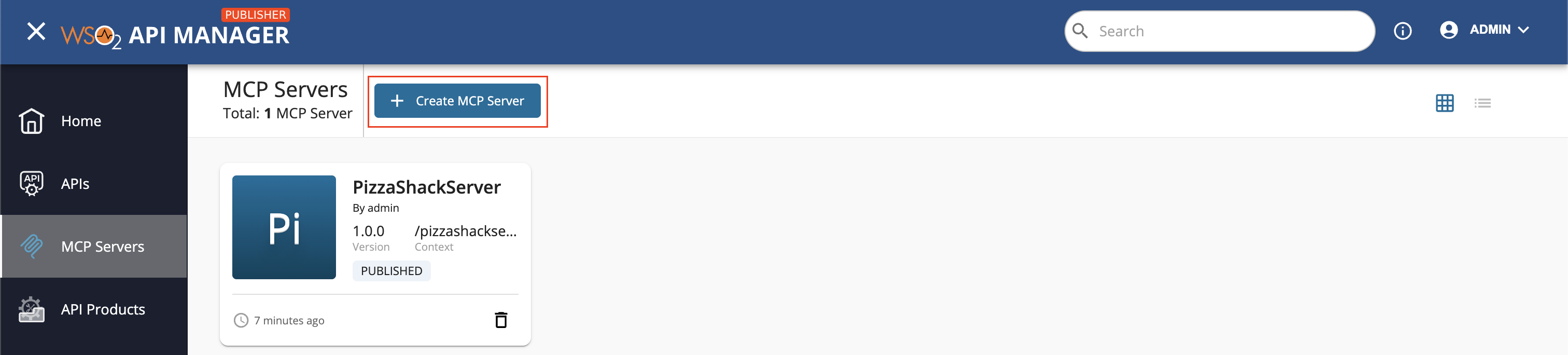
- If this is your first MCP Server, you'll see the "Let’s get started!" page.
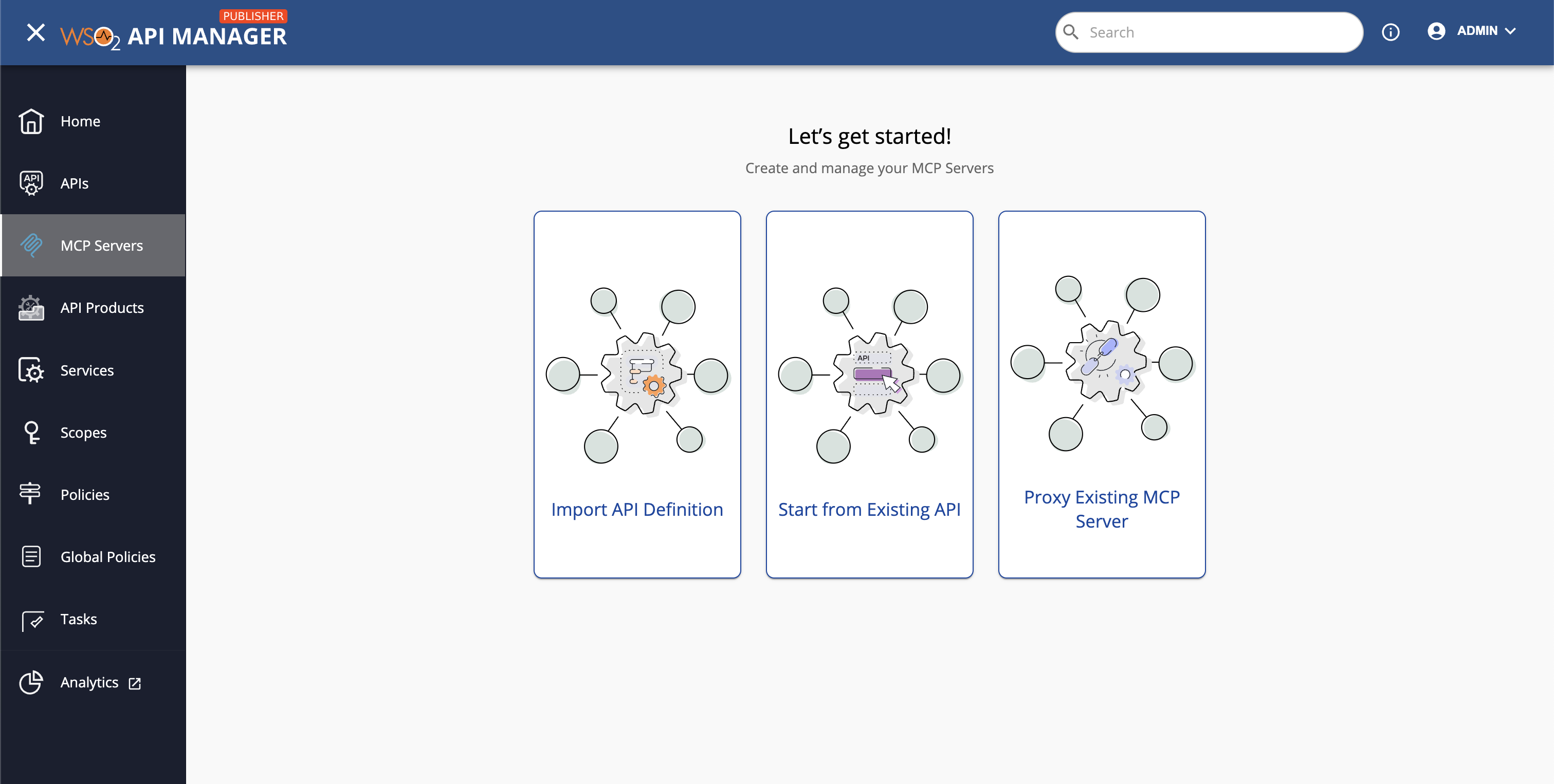
- In the navigation, click Proxy Existing MCP Server → Proxy an Existing MCP Server.
-
Provide the definition
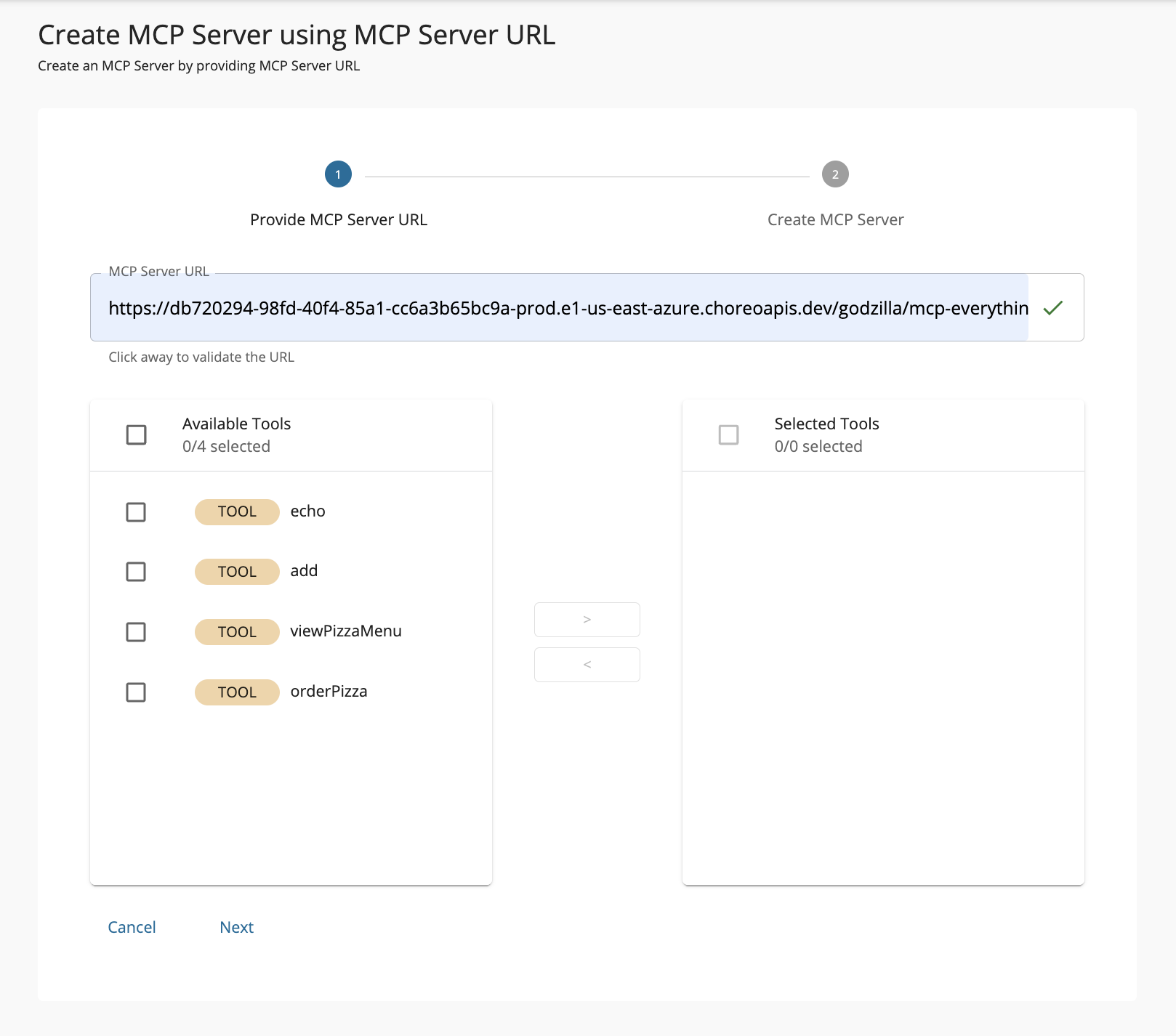
- Select MCP Server URL and enter:
https://db720294-98fd-40f4-85a1-cc6a3b65bc9a-prod.e1-us-east-azure.choreoapis.dev/godzilla/mcp-everything-server/v1.0
- Select MCP Server URL and enter:
-
Select tools to import
- Select the tools to expose through the MCP Server in APIM. Click Next.
-
Enter MCP Server details
Fill in the details below and click Create.
Note
The Endpoint must be the backend base URL your tools will call at runtime—not the OpenAPI document URL.
Field Sample value Name EverythingMCP Context /everything Version 1.0.0 Endpoint https://db720294-98fd-40f4-85a1-cc6a3b65bc9a-prod.e1-us-east-azure.choreoapis.dev/godzilla/mcp-everything-server/v1.0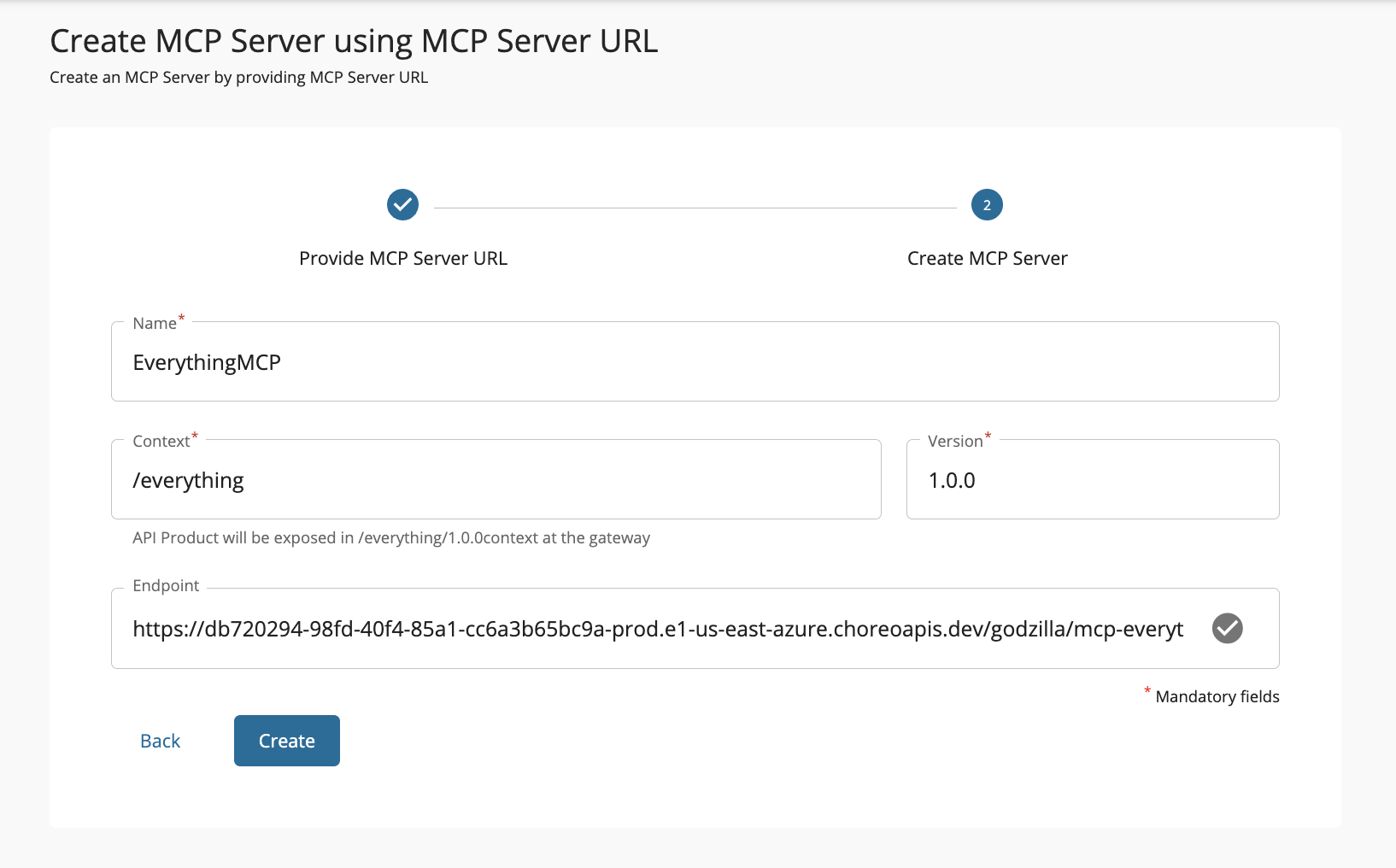
Next Step → Update and Deploy Your MCP Server
Once the MCP Server is created, you may want to refine tool names and descriptions, test them in the MCP Playground, and deploy them to the desired Gateway. For a complete walkthrough, see Updating Tools and Deploying the MCP Server.